
 When it comes to the world of American football, there is a strong argument that the football itself might be the most important piece of equipment that gets used. Obviously, other things could be thrown and kicked around, with countless other sports using obstacles of their own, but it simply wouldn’t be the same as the sport that people have come to know and love.
The ball is quite specific for National Football Leagues games, having its own history and properties, with the NFL putting regulations in place to ensure a standardised nature to the equipment when compared to those used in recreational games.
The History of the Ball
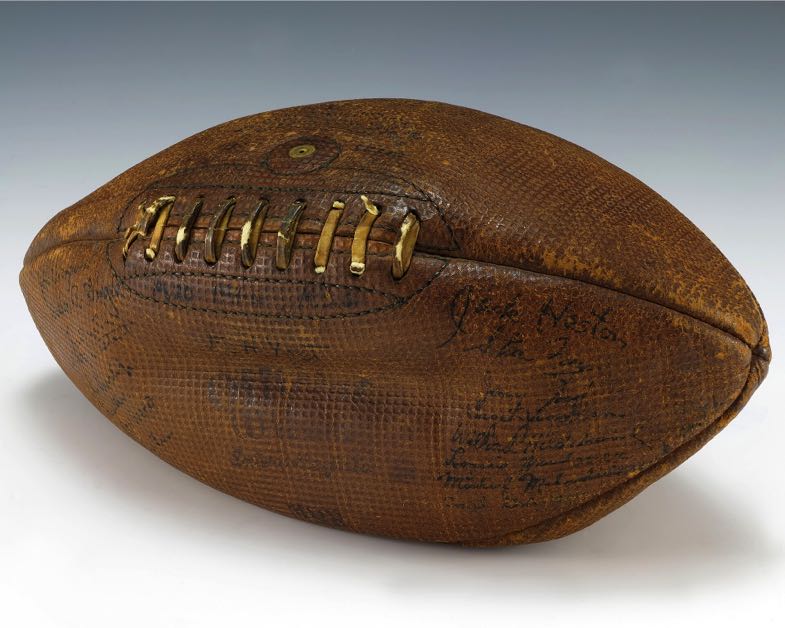
#/media/File:Football_signed_by_Gerald_R._Ford.jpg)
Balls have been around in one form or another for even longer than sports have existed. It was in the 1860s, however, that they began to take on a more uniform nature, thanks to the innovations of an English shoemaker named Richard Lindon. He created balls that could be manufactured in larger numbers and then inflated, becoming more regular in their shape and making carrying and kicking them much easier. Whereas the ball that we know and use today in the world of the NFL has a lemon-like shape to it, these balls looked more like a plum and were used in rugby and similar sports.
Boasting a hand-stitched nature and made up of four panels of leather casings and pigs’ bladders, he worked with William Gilbert to create the balls, becoming the main suppliers to Rugby School, which was just down the road. If the name sounds familiar to you, that will be because Gilbert balls became the most popular make of rugby balls, with the business of creating them remaining in the family. There is also a strong link between rugby balls and those used in American football, sharing a similar shape until they changed in 1934 to see a more tapered end come in and a reduced size around the middle.
The Introduction of ‘The Duke’
 In 1941, a new manufacturer of the ball was introduced when Wilson Sporting Goods won the contract with the NFL. The ball was stamped with the words ‘The Duke’, which was a nickname for the owner of the New York Giants, Wellington Mara, who had been named ‘Wellington’ as a tribute to the Duke of Wellington by his father, Tim Mara. George Halas, the owner of the Chicago Bears, urged the name to be given in order to give something of a reward to Tim Mara for his work that ensured that Wilson won the right to supply the official balls to the National Football League.
The nickname remained in usage until 1970, at which point the National Football League-American Football League merger happened and Wilson changed the name. When Wellington Mara died in 2005, aged 89, Wilson decided that it was only right to reintroduce the nickname to the ball in his honour and it has been used ever since. Though white balls were used historically during nighttime games in order to make them easier to see, that isn’t really necessary anymore thanks to the improvements in artificial lighting, meaning that the natural brown colour of the ball persists.
What the NFL Regulations Say
 As you might imagine, in a sport as well-regulated as the National Football League, there are certain rules in place when it comes to the balls used. For starters, an outdoor game has to have 36 balls available for use. Indoor games have to have 24 balls available, with the referee needing to test them with a pressure gauge two and a half hours before a match is due to get underway. There are also specific kicker balls, which are delivered by the manufacturer in a special box that is sealed, with each ball having been stamped with the letter ‘K’ before they are sent out to the stadium.
Kicking balls were introduced after the NFL Competition Committee ruled that teams could condition balls in order to allow them to fly higher and further. There are 12 balls and they are opened by the officials in their room two hours and 15 minutes before the start of the game. Horween Leather Company has been the company responsible for providing the leather for National Football League balls since 1941, using cow leather to make them, in spite of the fact that they are often referred to as ‘pigskins’ by both players and those responsible for commentating on games.