
 In some senses, there are plenty of similarities between American football and rugby. Whilst rugby players don’t wear the same padding and protection as American football players, there is a physicality to both sports that suggests a level of toughness is required to take part in either.
There are also some positions that are roughly the same as one another, for example. Then there is the fact that both sports are about progressing a similarly shaped ball up the pitch. That being said, the differences between the two sports are significantly more pronounced than the similarities.
Different Rules
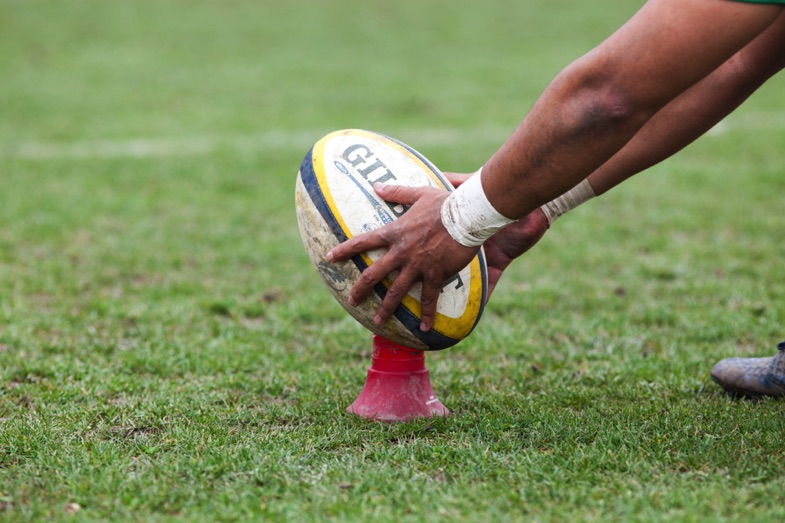
It goes without saying that there are different rules between American football and rugby, which is a necessary part of how they’re two different sports from one another. One of the most obvious ones is in the tackle, given the fact that rugby players can still pass the ball after being tackled, as long as they’re not on the ground. If they are, the ball is released and play continues. In American football, a tackle draws play to a close and the team on offence keeps the ball, unless play is in the fourth down. Another big difference comes in the shape of forward passes, which are not allowed in rugby.
In American football, the role of the quarterback would be pretty different if they weren’t allowed to pass forward. Although only one forward pass can be attempted each play, a player can pass the ball forward if they’ve already received a pass backwards. Another huge difference in the rules is the makeup of the teams, given the fact that American football has evolved to essentially have three different ‘units’ within the same team – an offence, a defence and a special team. In rugby, all players are part of both the offence and the defence, with substitutes in rugby mainly for injury.
In the world of rugby, players can be issued a yellow card for a lesser infringement, resulting in a player leaving the field for ten minutes, or a red card for a more serious offence, which results in them missing the rest of the game. Players only get disqualified in American football for what is referred to as ‘Unsportsmanlike Conduct’, but they can be replaced by someone else in the squad.
Game Length
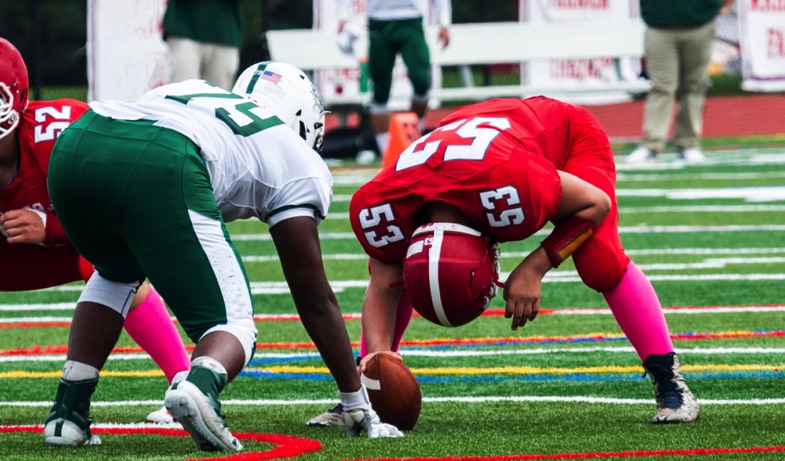
If you wanted to point to one of the biggest differences between the two sports, the length of time that games last for would probably be high on your list. Rugby union matches get split into two halves of 40 minutes apiece, with the gap in between typically lasting for 15 minutes. Once the end of a half is reached, rugby union matches actually carry on until the ball goes dead, which means that tries can be scored even after the 40 minutes of a half have run out. Whilst the same thing can theoretically happen in an American football game, this is only usually for seconds rather than minutes.
American football games are made up of four quarters that last 15 minutes each. The theory, therefore, is that games should last for an hour, but in both sports the clock is stopped for substitutions and injuries, meaning that they will often last significantly longer. The half-time break in American football usually lasts for between 12 and 15 minutes, but when the Super Bowl comes around this tends to be stretched out because of the global nature of the game and the presence of half-time entertainment. Regardless, American football games are more likely to last for hours than just the one.
How the Game Is Played
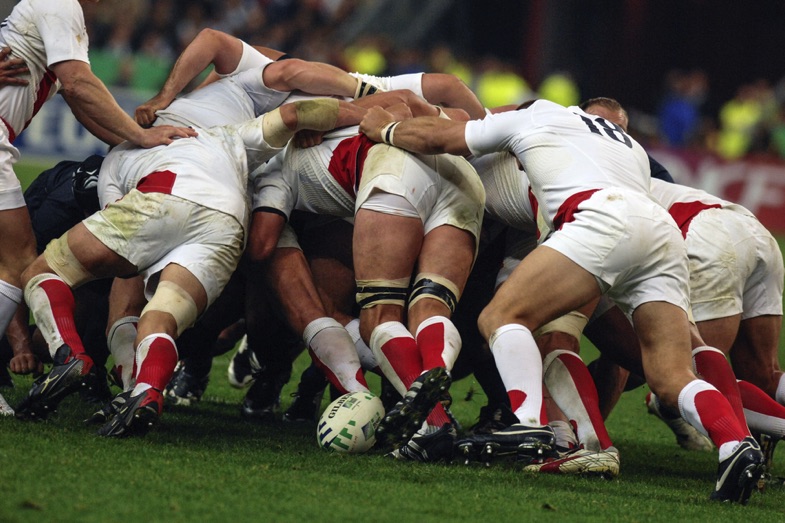
In their most basic sense, both American football and rugby are about carrying the ball over the goal line of the opponent. It is in the intricacy of the gameplay that the differences appear. In rugby, for example, the ball has to be put onto the ground for a try to be scored, whereas in American football the ball simply has to cross the line. When the ball is kicked in rugby, it is usually done for tactical reasons, as well as going for goal, with drop goals allowed at any time. In American football, meanwhile, if a team kicks the ball then they surrender possession most of the time.
The fact that drop goals can be scored at any time in rugby is another thing that differentiates it from American football. In gridiron games, field goals cannot be scored in front of the line of scrimmage. This is thanks to a rule that was introduced in the latter part of the 20th century and has all but killed off the drop-kick field goal in the sport. Whilst catching and blocking balls that are kicked are important skills in both disciplines, the intricacies of the kick and its use in rugby are far more complex than in American football, where it has started to be used more and more sparingly as a tactic.
Protective Gear

Turn on the television to a sports channel when either rugby or American football is being played and it will take you no time at all to work out which discipline it is that’s being broadcast. That is thanks to the fact that American football players wear significantly more protective gear than their rugby-playing counterparts. Whilst some rugby players might choose to wear the likes of a box, with most choosing not to, gridiron is a sport that puts player protection through equipment high on its list. The equipment worn is the same for every player in every position.
That means that whether you are a defensive player or an offensive one, you will be loaded up with gloves, a helmet, pads, cleats and padding for your knees and elbows, amongst other things, each time you take to the field. Rugby players might opt to wear body protection or a skull cap, but are otherwise much more exposed when it comes to the way that the sport is played. This does allow for more flexibility of play, which is why rugby players are expected to do everything, but it also leaves rugby players significantly more exposed and liable to pick up an injury during play.
Field of Play

The other major difference between rugby and American football is the field upon which the games are played. When it comes to gridiron, every field is the same, regardless of the level at which the game is played. Whilst both sports take place on rectangular fields, the dimensions used for rugby pitches can vary quite significantly. The maximum size of a rugby pitch is larger than that of an American football field, but can also be roughly the same size. Here is a look at the maximum measurements of a rugby pitch compared to the standardised size of a gridiron field:
| What | Rugby Pitch Distance | American Football Field Distance |
|---|---|---|
| Length | 144 metres | 110 metres |
| Between Goal Lines | 100 metres | 91 metres |
| Width | 70 metres | 49 metres |
| End Zone / Goal Area | 10 – 22 metres deep | 9.1 metres deep |
When it comes to the lines on the field of play, they are also vastly different between the two sports. The American football field sees sidelines and end lines dictate the boundaries, whilst in rugby union it is touchlines and dead-ball lines. Interestingly, in both gridiron and rugby union, the line itself is out of play, which puts the sports in direct contrast to many others that count the lines as still being in play. This is a nod to the fact that both sports developed out of the same original sport.
Rugby pitches are split into two halves by the halfway line, whereas an American football field has the 50-yard line, sometimes called the midfield line. In gridiron, there are then another 18 solid yard lines across the field that are marked out at five-yard intervals from each goal line to the 50-yard line. There are only two other lines on rugby union pitches, which are 22 metres from the goal lines. The yard lines in American football are important, given the fact that they outline whether a team has successfully advanced far enough each time there is a play carried out.
When you add in the use of minor transverse lines in American football, it is easy to understand how the two sports can look entirely different to anyone tuning in to watch them for the first time. In gridiron, there is also the use of hash marks, which aid in that different appearance. The only thing similar in rugby is the line five metres from the goal line, which appears as a series of short dashes, which are there to assist the referee.