
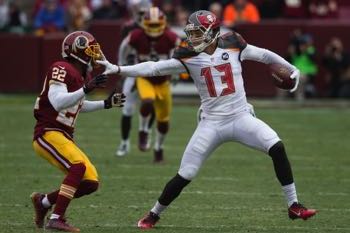
#/media/File:Mike_Evans_vs_Redskins_November_16_2014.jpg)
Each position in an American football team is one that sees the player doing something different for their team. In the case of Wide Receivers, they are part of a team’s offensive setup and their job is to be furthest away from the rest of the offensive formation, hence the ‘wide’ part of their name.
They will usually be one of the fastest players on the pitch, tasked with receiving passes and running up the field with the ball. It is seen as a key position for offensive teams, with some formations asking for several to be used in the same play to cause the opposition’s defence problems.
A Brief History of Wide Receivers
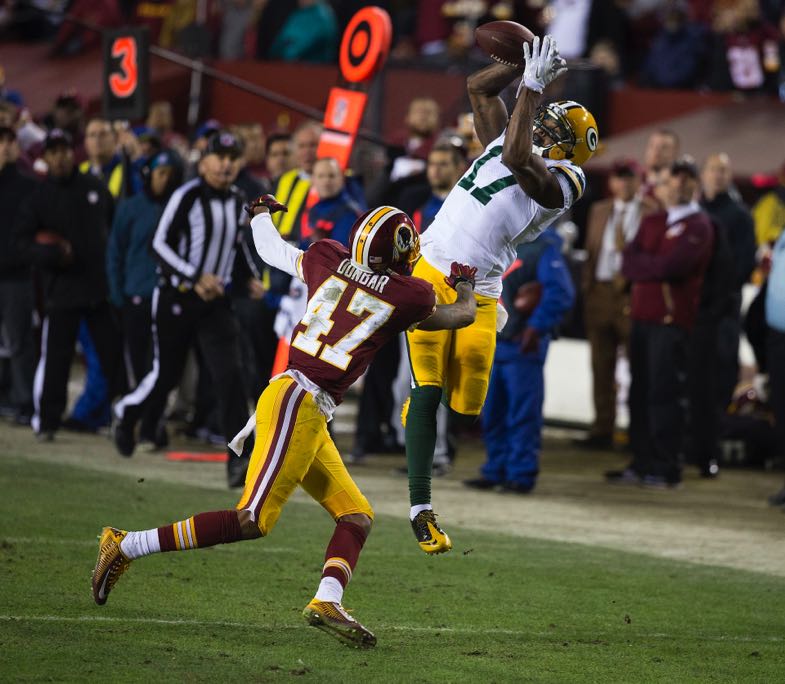

Originally, American football teams had a position known as the End. The End would play on an offensive line, being positioned next to the Tackles, being where a Tight End would play in the modern game. They would be an eligible receiver of a pass along with the Backs. In the more formative years of the sport, the majority of teams would only use Ends sparingly for receiving the ball, but by the 1930s some teams looked to push them further out in order to draw the defence away from running plays. This was the start of the development of the role that we know today.
Once the passing game began to evolve more, Running Backs were put into pass-catching roles and essentially became Wide Receivers. Back then, though, they were called Flankers, thanks to the fact that they would be found in a position on the ‘flank’. Many teams began to set up for attacking players with a Flanker, Split End, Half-Back, Full-Back, Tight End and Quarterback, whilst some experimented with two Wide Receivers. Some also began to use a Slot Receiver, which is a position that is considered to have been created by Al Davis.
The Wide Receiver’s Role in a Team
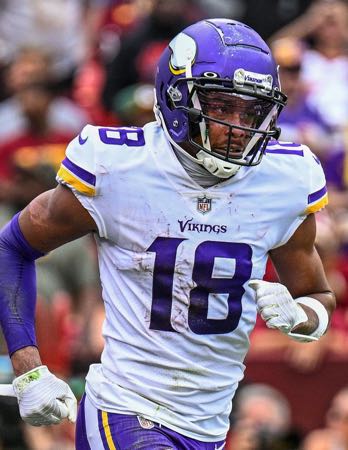

The principal role of a Wide Receiver is to get on the end of passes that are sent up field by the Quarterback. If it’s a passing play, a Wide Receiver will look to avoid a Cornerback or a Safety where possible, perhaps by outmanoeuvring them or even just outrunning them if necessary. If a Receiver is open and on a pass route, a Quarterback might choose to pass to them via a throw. A Receiver’s main requirement is to successfully catch a ball in order to complete the pass, running with it as far downfield as they are able to and, where possible, reaching the end zone and getting a touchdown.
If someone is a particularly fast Wide Receiver then they will usually be considered a ‘deep threat’ thanks to their ability to make it in behind defences. If, on the other hand, they tend to be good with their hands, they will be seen as being ‘possession receivers’ and will usually run on routes across the middle of the field so as to be able to convert a third-down situation. Even the height of the Receiver can have an impact on how they’ll play in a team, with taller ones typically playing deeper and further to the outside than shorter ones will look to do.
Wide Receivers can also be asked to block the run of another player, which is something that is usually dictated by the play. They will often block a defender that they’ve been assigned to in order to help out the Running Back, for example. They can also be used to draw defenders away from an intended action by carrying out what looks like an attacking run but may not actually be one. It is often only the most well-rounded Wide Receivers that can pull off both receiving passes and being able to block runners. They might be asked to run the ball, but this is only an occasional thing.
Types of Wide Receiver
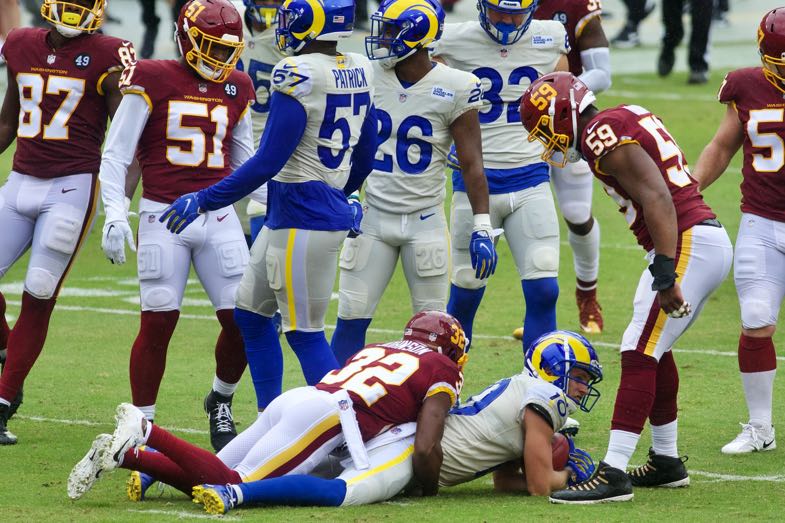
As you might have gathered from the History section, there are different types of Wide Receiver that have grown out of different positions across the history of the game. The Split End, for example, is a Wide Receiver that looks to be positioned as far away from the centre as possible, becoming known as a ‘Gunner’ in a punt formation. The Flanker, also sometimes called the Flanker Back, is often the team’s featured Receiver and lines up a yard or more behind the line of scrimmage and usually on the same side as the Tight End. They can go into either lateral or backward as needed.
Slot Receivers, also referred to as Slotbacks, will line up in the offensive backfield and be positioned on the horizontal between the Split End and the Offensive Tackle, or sometimes between the Tight End and the Flanker. There are Canadian and arena football games that allow Slotbacks to take a running start at the line. In NFL games, they can move backwards or laterally, but not if someone else in the backfield is also doing that. They tend to be larger players and will need to make catches over the middle. Canadian football sees three of them used.
The Strategy of Wide Receivers
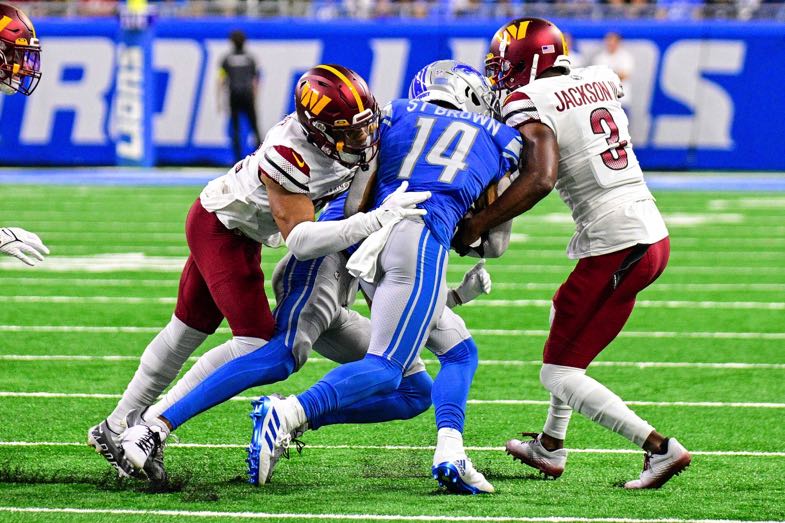
Wide Receivers can be involved in numerous different strategies of offensive teams, often exploiting mismatches in order to create scoring opportunities. The most common strategies involving Wide Receivers are as follows:
Route Combinations – This uses an offensive coordinator to design plays with numerous receivers running on complimentary routes to one another so as to confuse defences and create openings. The route combinations will usually involve receivers running on short, medium and deep routes as to attack different areas.
Red Zone Targets – The Red Zone is the area inside the opponent’s 20-yard line and Wide Receivers will be used as prime targets there to score touchdowns.
Play-Action – Quarterbacks will sometimes fake a handoff to a Running Back prior to throwing the ball to a Wide Receiver, with this play known as a play-action.
Screen Passes – Here, Quarterbacks can quickly deliver the ball to a Receiver behind the line of scrimmage, which asks Wide Receivers to use their vision and agility to make their way through traffic and pick up yardage after their catch.