
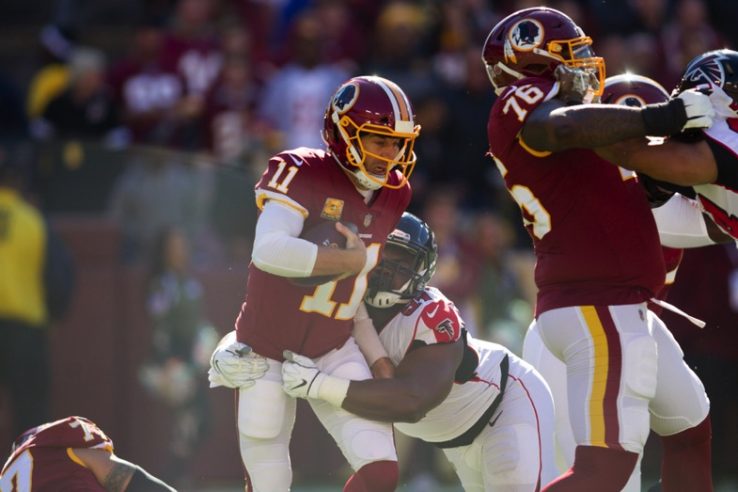
There are 32 teams that make up the modern NFL. Such has been the case since 2002. Purely on the numbers, that paints a settled picture. However, the bare figures mask considerable change. While true expansion sides have been relatively rare in recent times, several of the league’s franchises have relocated to a new city and, in some cases, adopted a new identity.
The NFL’s Newest Franchises
Since 1995, the NFL has introduced four new teams. Many factors are weighed when adding a new franchise to such a wildly successful league, including fan demand, financial opportunities, and the appeal of new or returning markets. In recent years, the following quarter have all met with the league’s approval.
Houston Texans
 Between 1960 and 1996, Houston was home to the Houston Oilers. However, the Oilers’ era came to an end amidst stadium controversy, declining attendances, and the desire of Bud Adams to move his franchise elsewhere. With the Oilers heading to Tennessee, NFL football in Houston came to an end.
The absence of an NFL side in Space City lasted only five years, ending in 2002 when businessman Bob McNair paid $1 billion to restore professional football to Houston. The Houston Texans became the NFL’s 32nd franchise, balancing the previously uneven conference structure.
As many anticipated of such a new franchise, the Texans struggled initially – ending their debut 2002 season with a 4-12 record. A first winning year didn’t arrive until the 9-7 2009 season. Propelled by star names including J.J. Watt, the Texans then became a regular playoff contender, winning the AFC South eight times between 2011 and 2024.
Baltimore Ravens
 One of the more unusual expansion teams, the Baltimore Ravens were created when Art Modell decided to relocate his Cleveland Browns organization to Maryland in 1996. However, while Modell transferred much of the playing squad and staff to Baltimore, he did not take the team’s identity with him. Under a deal brokered with the NFL, the Browns’ name, history, and colours remained in Cleveland, with the promise that the franchise would return at a future date.
As such, the Baltimore Ravens are effectively an entirely new franchise, albeit one built from the remnants of another. Whatever their origins, the Ravens and their dominant defence wasted little time making their presence felt. Only five years after their debut season, Baltimore defeated the New York Giants 34-7 in Florida to win Super Bowl XXXV.
Following the death of Art Modell in 2012, many of the Ravens playing squad wore “Art” patches on their jerseys throughout the 2012 season. Paying the ultimate tribute to their owner, Baltimore marched all the way to a second Super Bowl title.
As promised, the NFL reactivated the Cleveland Browns in 1999. The break did little to inspire the franchise. As of 2024, the Browns remain one of only four sides to never make the Super Bowl.
Carolina Panthers
 As early as 1987, former Baltimore Colts wide receiver Jerry Richardson stated his desire to back an NFL expansion side in Carolina. It took until 1993, but Richardson finally got his wish, with his new Carolina Panthers project unanimously voted to become the NFL’s 29th franchise.
The Panthers made their debut in 1995 and posted a respectable 7-9 record. In only their second season, they improved to 12-4 and made it to the NFC Championship game. The team, which enjoys avid support in both North and South Carolina, has made it to the Super Bowl twice, losing to the Patriots in 2003 and the Broncos in 2015.
Jacksonville Jaguars
 1995 was a double expansion year for the NFL, as the league moved from 28 to 30 teams. Funded by the ownership group Touchdown Jacksonville!, the Jaguars beat off competition from St. Louis, Baltimore, and Memphis to become the 30th NFL Franchise. Initially taking a spot in the AFC Central, the Jaguars moved to the AFC South in 2002.
Under the guidance of future two-time Super Bowl-winning head coach Tom Coughlin, Jacksonville mirrored the early success of fellow expansion side Carolina. Like the Panthers, they made it to the playoffs in only their second season before losing to the Patriots in the AFC Championship game. As of 2024, that is as good as it has got for Jacksonville, who join the Cleveland Browns, Detroit Lions, and Houston Texans as the four sides never to make a Super Bowl appearance.
Relocations
One of the hallmarks of the NFL is the frequency with which teams move to new cities. If a stronger market, more modern facilities, or a new stadium beckons, NFL owners are prepared to move to take advantage with scant regard for loyal fans in their old home city. Since the mid-1990s, the following teams have all moved on to pastures new.
Los Angeles Rams
 Started in Cleveland in 1936 before moving to Los Angeles in 1946. They remained in LA until 1995, then transferred to St. Louis. The Rams‘ latest shift took them back to LA in 2021, as owner Stan Kroenke funded the new SoFi Stadium in Inglewood. The Rams’ move reestablished the NFL in LA following a 25-year absence.
Los Angeles Chargers
 Originally owned by hotel heir Barron Hilton, the Chargers actually began life in LA back in 1960. However, their initial stay was brief, as they moved to San Diego in 1961. Following 46 years in San Diego, the Chargers paid a $645 million fee to move back to their original home. Returning as the LA Chargers in 2017, they now share SoFi Stadium with the LA Rams.
Las Vegas Raiders
 The Raiders have one of the most nomadic histories in the NFL. In common with the Chargers, the Raiders sprang to life in 1960 as the Oakland Raiders. After 21 years and two Super Bowl wins in Oakland, the side moved to LA, where they won another Super Bowl in 1983. The Raiders remained in LA until 1994, then returned for a second (less successful) stint in Oakland from 1995 to 2019. Still unable to settle, the allure of the new Allegiant Stadium led the Raiders to become the first NFL franchise to call Las Vegas home in 2020.
Rebrands
Tennessee Titans
 When the Oilers moved from Houston to Tennessee in 1997, they played two seasons as the Tennessee Oilers. In 1999, the franchise officially became the Tennessee Titans, creating a distinct new entity while retaining the historical records of the Houston Oilers. The name change seemed to inspire Tennessee, who made the Super Bowl in their first year as the Titans.
Washington Commanders
 Born as the Boston Braves in 1932, the team changed their name to the Boston Redskins in 1932 to avoid confusion with the Boston Braves baseball team. Relocating to the capital in 1937, the franchise became the Washington Redskins. However, the “Redskins” name, due to its perceived racial connotations, was debated for decades. In 2020, owner Dan Snyder announced that the team would retire the Redskins name amid corporate and social pressure. Known simply as the Washington Football Team for the 2020-21 season, the team officially rebranded as the Washington Commanders in 2022.
The number of teams in the NFL has now been stable for over 20 years. However, as we can see, much change lurks within that appearance of stability. If history is any guide, the coming decades are likely to see further relocations, rebrands, and possible expansions – with the prospect of a European NFL franchise remaining a hot topic.